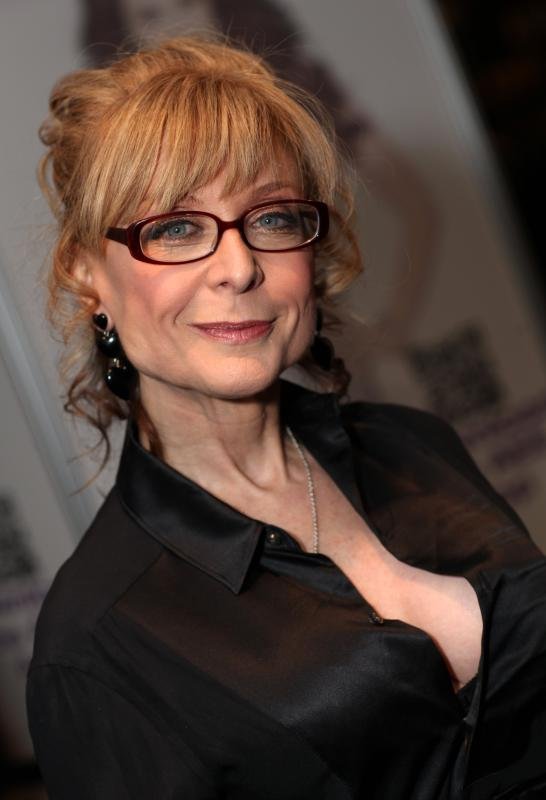
Nina Hartley is one of the most enduring and widely recognized American performers of her generation, a career that has stretched across four decades and moved well beyond performance alone. Born in California in 1959, she became known first as a film performer in the 1980s, then as a director, writer, lecturer, and outspoken advocate for sex education and free expression. For readers who know her only by name, the most striking part of her story is its length and breadth: few performers in any branch of entertainment remain relevant, working, and publicly engaged for as long as Hartley has, while also building a second reputation as an educator. This profile traces that journey in plain, non-sensational terms, from her Berkeley upbringing and nursing education to her early film career, her awards and hall-of-fame recognition, her educational books and lectures, and her later work as a speaker and mentor. It explains why she is often described as a bridge figure, someone who helped connect the adult industry with mainstream conversations about health, consent, pleasure, and personal freedom.
Early Life and Education
Nina Hartley was born Marie Louise Hartman on March 11, 1959, in Berkeley, California, and grew up in the San Francisco Bay Area during a period of rapid social and cultural change. Berkeley in the 1960s and 1970s was a place where debates about civil rights, feminism, free speech, and personal freedom were part of everyday conversation, and that atmosphere would later shape both her public views and her willingness to speak openly about subjects many people avoided. She was raised in a family that valued education and discussion, and she developed an early interest in health, communication, and helping other people understand their own bodies and choices. Those interests, rather than any single dramatic turning point, help explain the unusual path she later took: she did not simply enter entertainment and stay there, but combined performance with study, teaching, and advocacy.
Hartley attended Berkeley High School and then went on to San Francisco State University, where she studied nursing. She graduated in 1985 with a Bachelor of Science degree in nursing, a qualification that gave her formal training in anatomy, health, patient care, and professional responsibility. The nursing background matters for understanding her later work, because it gave her a scientific vocabulary and a practical, health-centered way of talking about sexuality. When she later wrote and lectured about safer sex, communication between partners, and respect for boundaries, she was drawing on both lived experience and classroom training. It also set her apart in an industry where few performers arrived with a university degree in a health profession, and it helped audiences, journalists, and students take her educational work seriously. Long before she became a familiar public figure, in other words, she had already chosen a profession centered on care, privacy, and informed choice.
Entry Into Film and Early Career
Hartley began working in adult films in 1984, a time when the industry was shifting from cinema screenings to home video. That change was important: video made films cheaper to produce and easier to distribute, and it created steady demand for performers who were reliable, professional, and comfortable on camera. Hartley quickly became one of those performers. Her early work established a reputation for confidence, humor, and a natural screen presence, qualities that helped her stand out in a crowded field and led to regular work with major studios of the period. Unlike performers whose careers lasted only a few years, she treated the work as a profession from the start, learning how productions were organized, how directors and crews worked, and how a performer could build a lasting name rather than simply appear in a string of unrelated titles.
By the late 1980s she was already a well-known figure in the industry, and her career continued to grow through the 1990s as adult video became a large home-entertainment business. She worked across many genres and formats, took on a wide range of roles, and developed a loyal audience. Observers often note that her longevity was not accidental. She maintained a consistent public image, she was known for punctuality and preparation on set, and she understood the business side of her work, including promotion, appearances, and fan interaction. Those habits mattered in an industry that changed quickly, from video to DVD and later to online distribution, because they allowed her to adapt while many contemporaries left the business or faded from view.
Awards, Directing, and Longevity
Over time Hartley added directing and producing to her work, a step that changed how she was seen inside the industry. As a director she was able to shape projects from the other side of the camera, working with performers, planning scenes, and thinking about pacing, tone, and audience. That experience also made her a valuable mentor for newer performers, because she could explain both what it felt like to be on camera and what a production needed in order to run well. Directing is often a difficult transition, but Hartley made it while continuing to perform, which kept her connected to the practical realities of the work rather than moving entirely into management.
Her standing in the industry is reflected in major honors. She has been inducted into the AVN Hall of Fame and the XRCO Hall of Fame, two of the most respected forms of lifetime recognition in adult entertainment, and she has received multiple industry awards across her career. Hall-of-fame induction is
especially significant because it is not given for a single popular title; it recognizes sustained contribution, influence on other performers, and a career that helped shape the field. In Hartley’s case that influence includes both her on-screen work and her later educational and advocacy roles. She is frequently cited in
histories of the industry as one of the performers who helped define the video era, and her name remains familiar to audiences who came to the genre in different decades, from the 1980s through the streaming era.
Sex Education and Advocacy
The second half of Hartley’s public career is at least as important as the first, and it is the part that most clearly separates her from many of her peers. From the 1990s onward she became a prominent sex educator, writing, speaking, and presenting educational material that emphasized communication, consent, safety, and pleasure as connected ideas rather than separate ones. Her best-known educational project is the book Nina Hartley’s Guide to Total Sex, published in the late 1990s and written with I. S. Levine, which presented practical advice in a direct, non-judgmental style. The book, along with a series of educational videos under the same name, reached audiences who might never have attended a lecture, and it helped establish her as a credible voice in sex education at a time when such topics were rarely discussed openly in mainstream media.
Hartley has also lectured at colleges and universities, spoken at conferences, and appeared in discussions about sexual freedom, free speech, and the rights of adult performers. She has worked with and spoken at events connected to the Woodhull Freedom Foundation, an organization concerned with sexual freedom and human rights, and she has been a vocal supporter of safer-sex practices, particularly during and after the HIV and AIDS crisis, when clear public-health information was urgently needed. Her approach has consistently been sex-positive: she argues that adults should be able to make informed choices about their own bodies, that shame is a poor teacher, and that honest conversation between partners is more useful than silence or fear. Whether audiences agree with every part of that philosophy or not, her willingness to discuss it publicly, calmly, and in detail is a major reason she has remained a sought-after speaker long after many performers retired from public life.
Later Career and Public Image
In the 2000s and 2010s Hartley continued to work while the industry around her changed again, this time toward online platforms, social media, and direct interaction with audiences. She adapted to those changes without abandoning the educational work that had become central to her identity. She maintained a public presence through appearances, interviews, and online channels, and she remained willing to discuss her career in a straightforward way, including its challenges, its stigma, and the practical lessons she had learned about health, work, and self-respect. That openness is part of why she is often invited to speak about the history of adult entertainment as well as about sex education: she can place personal experience inside a larger story about changing technology, changing laws, and changing public attitudes.
Hartley is also known for a distinctive public image that has stayed recognizable over decades, including her blonde hair and glasses, which became a kind of trademark in photographs and on stage. More importantly, she has cultivated a reputation for articulateness. In interviews she tends to speak in complete, thoughtful answers, to place her work in a social and historical context, and to challenge simple stereotypes about performers. She has described herself as a feminist in the sex-positive tradition, a position that has sometimes put her at odds both with critics of the adult industry and with other feminists who take a different view. That debate is part of her significance: she does not fit neatly into one camp, and her career invites readers to think carefully about autonomy, labor, sexuality, and freedom of expression rather than settling for a single slogan.
Legacy and Influence
Hartley’s legacy is best understood as a combination of longevity, professionalism, and education. She did not treat a long career as an accident; she built it by working steadily, by learning the production side of the business, and by using her platform to talk about health and rights in public. Younger performers have often pointed to her as an example of how to manage a public career over time, how to speak to the press with confidence, and how to move into teaching and advocacy without disappearing from the industry that made them known. Historians of adult entertainment likewise use her career as a useful timeline: she began in the video era, worked through the DVD boom, and remained visible in the online era, so her work touches almost every major technological change in the field.
Quick Facts
Full name at birth: Marie Louise Hartman. Professional name: Nina Hartley. Born: March 11, 1959, in Berkeley, California, United States. Nationality: American. Education: Bachelor of Science in nursing, San Francisco State University, 1985. Career start: 1984. Main roles: performer, director, writer, and sex educator. Best-known educational book: Nina Hartley’s Guide to Total Sex, written with I. S. Levine. Major honors: inducted into the AVN Hall of Fame and the XRCO Hall of Fame. Public focus: sex education, safer sex, communication, consent, and sexual freedom.
Frequently Asked Questions
Who is Nina Hartley? She is an American performer, director, writer, and sex educator whose career began in 1984 and who is known for both her long film career and her educational books and lectures. What is her real name? She was born Marie Louise Hartman. Where was she born? She was born in Berkeley, California, in 1959. What did she study? She studied nursing at San Francisco State University and graduated in 1985. Why is she considered important? Because she combined a very long performing career with directing, writing, and public advocacy for sex education and free expression, and she was inducted into major industry halls of fame. Is she still active? She has remained a public speaker and educator into later decades, even as the industry moved online, and she continues to be cited as a senior figure in discussions of adult entertainment history.
Conclusion
Nina Hartley’s story is, above all, a story of endurance and reinvention. She began as a California nursing graduate who entered a rapidly changing entertainment industry in 1984, built a reputation for professionalism and screen presence, and then expanded that reputation into directing, writing, and teaching. Her halls of fame recognize the length and influence of that work, while her books and lectures show a different kind of influence: the ability to talk about sexuality in clear, health-focused, and non-judgmental terms. For new readers, she offers a useful reminder that a public career can be more than a list of titles. It can also be a long conversation with audiences, students, and fellow performers about choice, safety, respect, and freedom, and that conversation is why her name remains important in American popular culture today.