
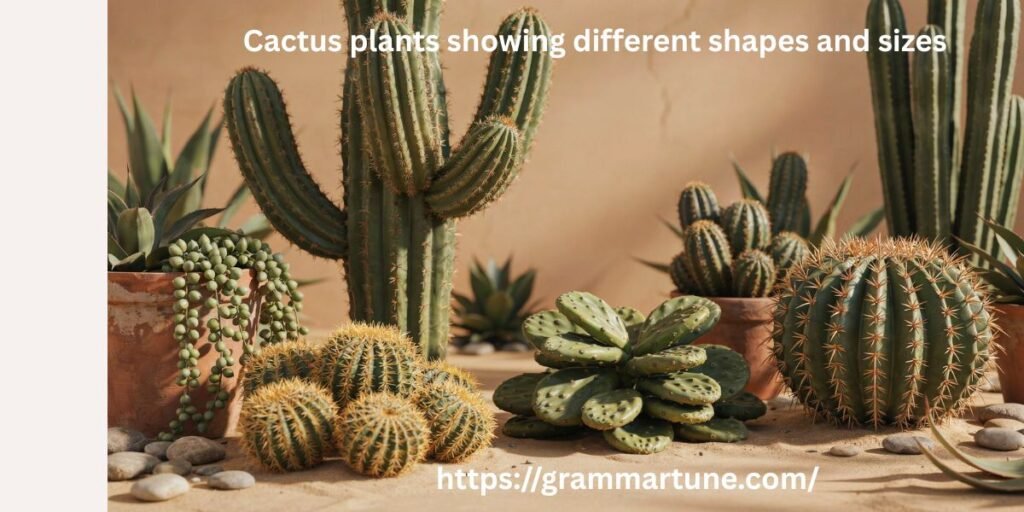
If you have ever wondered about the plural of cactus, you may have encountered two different forms: cactuses and cacti. Both are used in English, but they have different histories and stylistic associations. Understanding when to use each form can make your writing more natural and precise.
The word cactus comes from Latin, although its history reaches back to an ancient Greek word referring to a prickly plant. Because English borrowed the term from Latin, speakers eventually began using both the traditional Latin-style plural cacti and the regular English plural cactuses.
Cactuses vs. Cacti: Which Plural Is Correct?
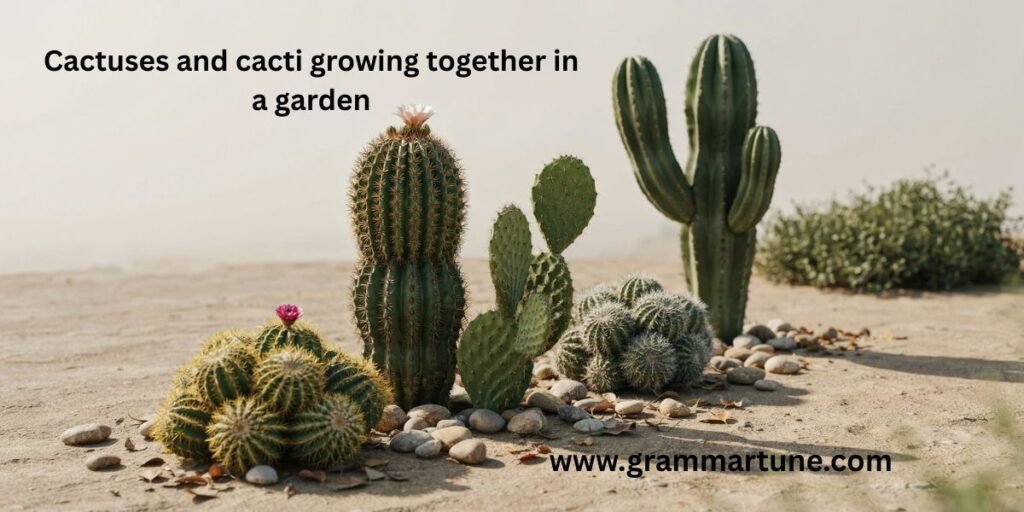
Both cactuses and cacti are accepted plural forms of cactus. The choice usually depends on the style, audience, and context rather than grammatical correctness.
Cactuses follows the normal English pattern for forming plurals. Many English nouns become plural simply by adding -s or -es, such as book/books, plant/plants, and class/classes. From this perspective, cactus/cactuses is completely straightforward.
Cacti, on the other hand, preserves a traditional Latin-style plural. It is particularly familiar in formal, academic, botanical, and horticultural contexts. Some speakers also prefer it because it sounds more traditional or scholarly.
For everyday English, there is generally no need to treat one form as universally correct and the other as incorrect. Both have an established place in modern usage.
Must read About: What’s the Plural of Scapula? Is it Scapulas or Scapulae?
Why Does English Have Two Plurals?
English contains thousands of words borrowed from other languages. When those words enter English, speakers may either preserve their original plural forms or adapt them to ordinary English grammar.
Cactus is a good example of this process.
A speaker can treat cactus as an English noun and form its plural with -es, producing cactuses. Alternatively, the speaker can retain the classical pattern and use cacti.
This phenomenon occurs with many borrowed words. English has historically absorbed vocabulary from Latin, Greek, French, Italian, German, and numerous other languages. As a result, some nouns have more than one accepted plural.
The difference between cactuses and cacti therefore reflects a broader feature of English: borrowed words do not always follow a single path after becoming part of the language.
What Does “Cactus” Mean?
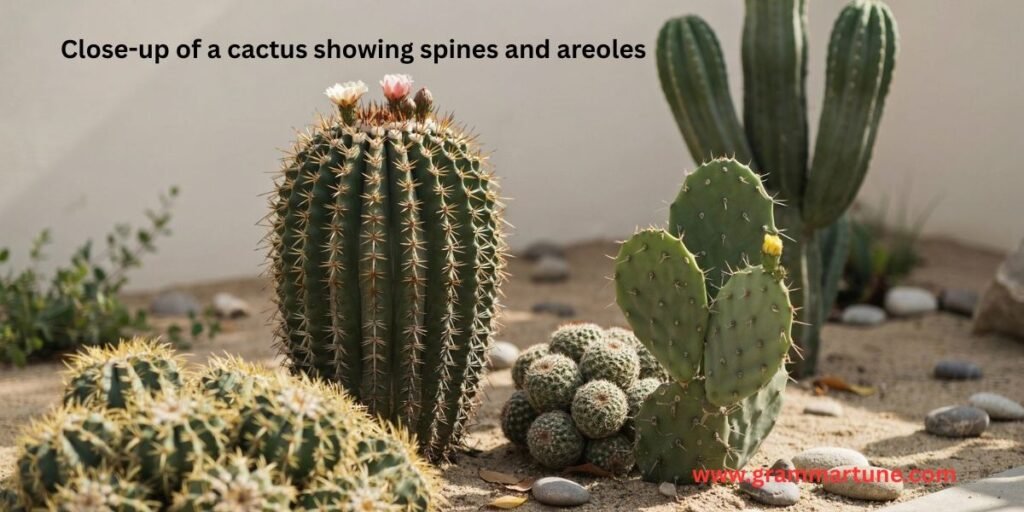
Before looking more closely at its plural forms, it helps to understand what a cactus actually is. A cactus is a type of succulent plant belonging to the family Cactaceae.
Cacti are especially associated with dry and desert environments, although they do not all live in deserts. Many species are adapted to environments where water may be limited or seasonal.
Cacti are known for several distinctive features, including specialized stems, reduced leaves, and areoles. Areoles are small structures found on cacti from which spines, flowers, branches, and other growths can develop.
The word cactus can refer to a single plant, while cactuses or cacti refers to more than one.
For example:
- Singular: There is a cactus on the windowsill.
- Plural: There are several cactuses on the windowsill.
- Plural: There are several cacti on the windowsill.
All three sentences are grammatically understandable, with the final two using different plural forms.
Cactus in Everyday English
In ordinary conversation, people may use cactuses because it follows a familiar English plural pattern.
For instance, someone might say:
“The garden has several colorful cactuses.”
This sounds natural to many English speakers, particularly when the conversation is informal.
The form cacti is also common:
“The garden has several colorful cacti.”
This version may sound slightly more formal or botanical to some readers, although it is not necessarily restricted to scientific writing.
The important point is that English speakers encounter both forms regularly.
When Should You Use “Cacti”?

Cacti can be a useful choice when you are writing about plants in a botanical, horticultural, scientific, or educational context.
For example:
“Several species of cacti can survive prolonged periods without rainfall.”
In this sentence, cacti fits naturally because the subject concerns plant species and their adaptations.
You may also encounter cacti in gardening articles, plant-care guides, museum descriptions, educational materials, and scientific discussions.
However, using cacti does not automatically make a sentence more accurate. It is simply one accepted plural form.
Is “Cacti” More Correct Than “Cactuses”?
Not necessarily.
The idea that cacti is always correct while cactuses is wrong is an oversimplification. Modern English recognizes cactuses as a legitimate plural form.
The traditional Latin plural can feel more prestigious or technically appropriate because of its connection with the original language. But English does not require every borrowed noun to retain its historical plural.
Language changes as speakers use words in new environments. Over time, English has regularly transformed foreign words so that they fit ordinary English grammar.
Therefore, choosing cactuses is not a grammatical mistake.
Must read about: What is the Plural of ‘Squid’? ‘Squid’ or ‘Squids’?
When Should You Use “Cactuses”?
Cactuses works particularly well when you want your writing to follow ordinary English plural patterns.
Consider these examples:
- “I bought two small cactuses for my office.”
- “The shop sells decorative cactuses.”
- “These cactuses need bright sunlight.”
- “She grows several cactuses in pots.”
These sentences are clear and natural.
For general audiences, cactuses can sometimes be easier to understand because readers do not need to recognize a Latin-derived plural pattern. It also follows the same basic logic used for many English nouns ending in -s or -us.
The choice can therefore depend on your intended tone.
Cactus, Cactuses, and Cacti in Different Contexts
The best plural form can vary according to the setting in which you are writing.
| Context | Natural choice |
| Everyday conversation | Cactuses or cacti |
| Casual writing | Cactuses or cacti |
| Gardening content | Cacti or cactuses |
| Botanical writing | Cacti is common |
| Academic writing | Cacti is common |
| General educational content | Either form |
| Informal personal writing | Cactuses often feels natural |
This does not mean that one form is mandatory in each category. Context simply influences which version may sound more appropriate.
A gardening expert might naturally write about cacti, while a casual blog writer might choose cactuses. Neither choice automatically creates a grammatical problem.
What About “Cactii”?
A common spelling mistake is cactii.
The standard plural forms are cacti and cactuses. Cactii is not the standard plural of cactus.
This mistake may happen because people assume that if one Latin-looking word ends in -i, another i should be added to create a plural. But the established form is simply cacti.
So remember:
- Cactus = one
- Cactuses = more than one
- Cacti = more than one
- Cactii = incorrect standard form
How Is the Plural of Cactus Formed?
There are two main pluralization patterns in modern English:
Cactus → cactuses
This follows a regular English plural pattern.
Cactus → cacti
This follows the traditional Latin-derived pattern.
The coexistence of these forms illustrates an important principle of English grammar: borrowed vocabulary can develop multiple accepted forms.
English is not a completely uniform language. Its vocabulary has developed through centuries of contact with other languages, and that history is visible in many everyday words.
Why Do Some People Prefer “Cacti”?
Some speakers prefer cacti because it is concise and familiar. Others associate it with formal botanical language.
There is also a historical reason for its popularity. Because cactus entered English through Latin, writers and speakers have long used a plural modeled on Latin grammar.
This does not mean modern English speakers are required to understand Latin in order to use cacti. The word has become established enough in English to function as a familiar plural noun in its own right.
Examples of Cactus in Sentences
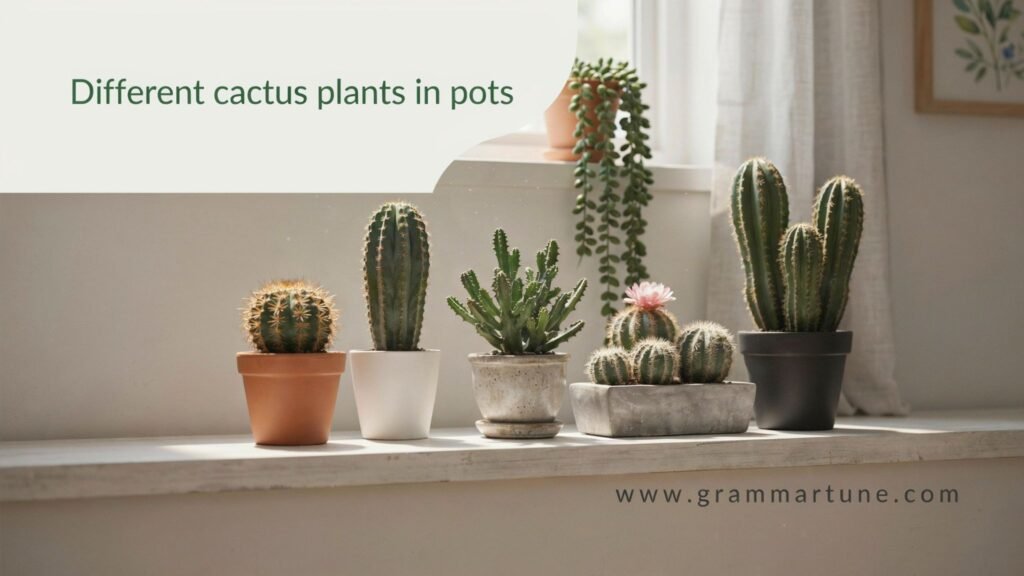
Seeing the word in context makes the distinction easier to understand.
Singular:
“That cactus has bright yellow flowers.”
Here, cactus refers to one plant.
Regular English plural:
“Those cactuses have been growing for several years.”
Here, cactuses refers to multiple plants.
Traditional plural:
“Those cacti have been growing for several years.”
Here, cacti also refers to multiple plants.
Botanical context:
“Many cacti have specialized structures that help them survive in dry environments.”
The plural cacti is especially natural in this kind of technical discussion.
Informal context:
“I bought three little cactuses for my desk.”
The regular English plural sounds perfectly natural in casual conversation.
Is “Cacti” Singular or Plural?
Cacti is plural. The singular form is cactus.
For example:
- One cactus
- Two cacti
- Several cacti
- A group of cacti
You would not normally say:
“There is a cacti on my desk.”
Instead, use:
“There is a cactus on my desk.”
The same distinction applies to cactuses, which is also plural.
Understanding this singular-versus-plural relationship is useful because words borrowed from Latin can sometimes look unfamiliar compared with ordinary English nouns.
Can You Say “Cactuses” in Formal Writing?
Yes.
There is no general grammatical rule that prohibits cactuses in formal writing. However, if you are writing specifically about botany, horticulture, or plant science, you may encounter cacti more frequently.
The most important consideration is consistency. If you choose one form for a particular article or document, maintaining that choice can make the writing feel smoother.
For example, if a gardening guide consistently uses cacti, there is usually little reason to switch repeatedly between cacti and cactuses without a stylistic purpose.
The Broader Grammar Behind Cacti
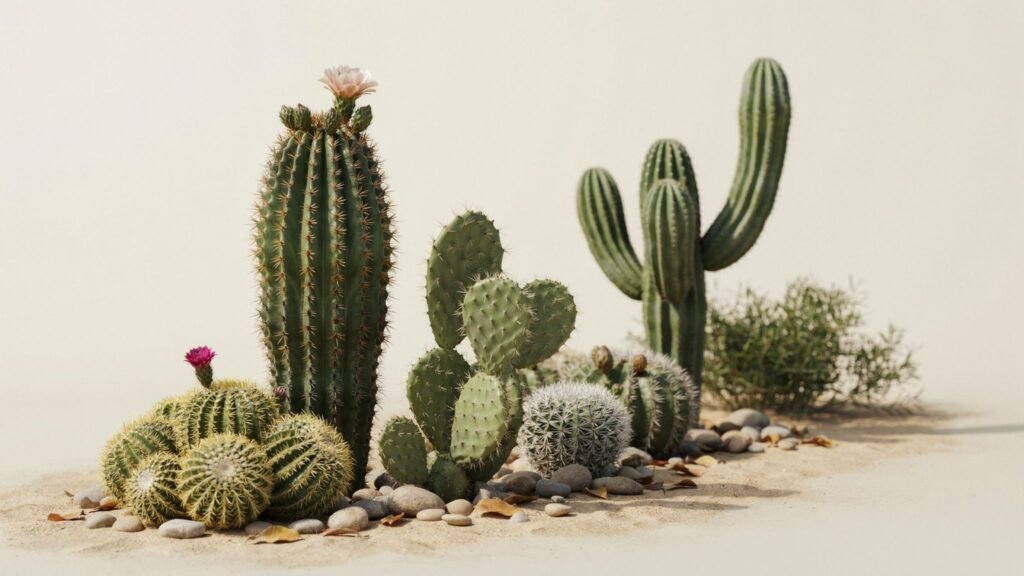
The plural of cactus is interesting because it demonstrates how English handles loanwords.
A loanword is a word adopted from another language. Once a borrowed word becomes established in English, speakers may preserve some features of its original grammar, modify them, or eventually replace them with English patterns. This can produce competing plural forms.
The same broad phenomenon appears in words such as formula, index, and focus, which can have traditional or English-based plural forms depending on the word and context.
However, the exact pluralization history differs from word to word. It is therefore better to learn the accepted forms of each noun rather than assume that every Latin-derived word follows the same rule.
What Does the Choice Say About Your Writing?
Usually, very little.
Using cacti does not automatically mean that someone has better grammar, just as using cactuses does not indicate poor grammar.
The two forms mainly reflect different grammatical traditions and preferences.
If your audience expects technical or botanical terminology, cacti may blend naturally with the vocabulary of the subject. If you are writing for a broad general audience, cactuses may feel more straightforward.
Good writing is not simply about choosing the form that looks most sophisticated. It is about selecting language that communicates clearly and fits the context.
Quick Answer: Cactuses or Cacti?
If you need the short answer, both are correct plural forms of cactus.
Use cactuses when you want the regular English plural. Use cacti when you prefer the traditional Latin-derived form or when it fits the terminology and tone of your subject.
The key forms are:
- Cactus — singular
- Cactuses — plural
- Cacti — plural
- Cactii — not the standard plural
There is no need to worry that choosing cactuses automatically makes your writing grammatically incorrect.
Frequently Asked Questions
What is the correct plural of cactus?
Both cactuses and cacti are accepted plural forms. Cactuses uses a regular English plural pattern, while cacti comes from the traditional Latin plural.
Is cacti the only correct plural?
No. Cacti is not the only correct form. Cactuses is also an established and accepted plural in English.
Is cactuses grammatically correct?
Yes. Cactuses is grammatically correct and can be used in everyday, educational, and formal writing.
Is cactii a word?
Cactii is not the standard plural form. The accepted choices are cacti and cactuses.
Which is better: cacti or cactuses?
Neither is universally better. Cacti may suit botanical or more formal contexts, while cactuses follows ordinary English pluralization and can sound natural in general conversation.
What is the singular of cacti?
The singular form of cacti is cactus.
Can I use both cacti and cactuses in the same article?
You can, but unnecessary switching can make your writing inconsistent. It is usually better to choose the form that suits your audience and maintain that preference throughout the article.
you will be must like reading about: Word vs Term: Are They the Same?
Final Takeaway
The question “What is the plural of cactus: cactuses or cacti?” has a simple answer: both forms are correct.
Cactuses represents the natural English way of making the noun plural, while cacti preserves a traditional Latin-derived pattern. Both forms are understood and widely used, although cacti can be especially common in botanical, horticultural, and academic contexts.
If you are writing casually, saying “three cactuses” is perfectly acceptable. If you are discussing plant species in a more technical setting, “three cacti” may feel more natural. The important thing is to use the form consistently and appropriately for your audience.
So, the next time you see a collection of prickly plants, you can confidently call them cactuses or cacti—just avoid the commonly mistaken form cactii.

Joulia, a seasoned wordsmith and grammar enthusiast, brings over a decade of blogging expertise to Grammar Tune. With a keen eye for linguistic precision and a passion for making complex grammar concepts accessible, he has helped thousands of readers enhance their writing skills. His engaging teaching style and practical approach to language learning have made him a trusted voice in the online grammar community.