Stoya, born Jessica Stoya, is an American performer, model, director, writer, and mainstream actress whose career has crossed several creative worlds. She first became widely known in adult entertainment in the late 2000s, then built a second public identity as a columnist and essayist, and later worked in independent film, television-style fantasy drama, and stage theatre. That combination is unusual, and it is why her name continues to appear in discussions about performance, media, privacy, technology, and the business of entertainment. This profile looks at her background, her rise, her move toward independence and directing, her writing, her mainstream roles, and the public positions that have shaped her reputation.
Stoya was born in Wilmington, North Carolina, in 1986 or 1987, to a Scottish father and a Serbian mother. Her first name was chosen by her mother after television news anchor Jessica Savitch. As a child, she wanted to become a dancer and began dance lessons at the age of three. She was home-schooled and earned her high-school diploma before she turned sixteen, an early sign of a disciplined and self-directed personality. Because her father worked in information technology, she grew up around computers and gaming equipment, and she later recalled using DOS at the age of three, with her mother teaching her to read and her father teaching her to navigate early computer systems. Technology therefore entered her life long before it became part of her professional work.
After moving to Philadelphia, Stoya attended a summer program at the University of the Arts. Her early working life in the city was varied. She worked as a secretary and as a flier distributor, and she also worked as a go-go dancer. She appeared in music videos for lesser-known bands, gaining early experience in front of a camera and in performance settings where timing, movement, and presence mattered. In May 2009, she said that she planned to leave Philadelphia and move to Los Angeles in the fall of that year, a decision that reflected the growing national scale of her career and the concentration of entertainment work on the West Coast.
Early Life and Education
Stoya’s early life helps explain the range of her later work. Dance gave her an understanding of the body as an instrument of expression, while home-schooling gave her an unusual degree of control over her own schedule and learning. Her early exposure to computers gave her a practical comfort with online platforms at a time when social media was still becoming central to entertainment careers. She has often been described as an early and effective user of social networking, and that skill helped her build a direct relationship with audiences rather than relying only on studios, distributors, or traditional publicity. In interviews from that period, she came across as articulate, humorous, and interested in the wider culture around her work, not only in the work itself.
Her stage name also has a personal history. She trademarked the name Stoya in 2009, basing it on a shortened version of her grandmother’s Serbian maiden name. The choice connected her public identity to family heritage while also giving her a distinctive professional name that was easy to remember. That balance between personal history and public branding would become a recurring theme in her career, especially in her later writing about privacy, identity, and control over one’s own image.
Entry Into Adult Entertainment
Stoya began posing for adult photographs for a friend, an experience that led to modelling work and then to work for alternative, or alt-porn, websites. The alt-porn scene of the mid-2000s valued a different aesthetic from mainstream adult production, often drawing on music, tattoo culture, independent fashion, and a more informal online presence. Stoya’s look and personality fitted that world well, and she developed a following before she became a major studio performer. She began performing in adult films in the mid-2000s, gradually moving from independent and alternative projects toward larger productions.
She was featured in two DVD productions for Razordolls and made a non-sexual cameo appearance in Vivid Alt titles before being contacted by Digital Playground. The studio initially discussed a project with Sophia Santi that did not happen, but in August 2007 Stoya met with Digital Playground representatives. In October 2007, Digital Playground signed her to an exclusive three-year contract. She is regarded as the company’s first alt-porn contract star, a distinction that mattered because it showed that alternative performers could become central figures for major studios rather than remaining on the margins of the industry.
Digital Playground Years and Breakthrough
The Digital Playground contract gave Stoya a stable platform, wider distribution, and a higher public profile. Her first scene for the studio was for Stoya Video Nasty, although Jack’s POV 9 was released first. The contract period coincided with a rapid change in how adult entertainment was distributed, as online video, social media, and fan communities became more important. Stoya adapted to that change unusually well, using interviews, appearances, and online communication to maintain visibility between releases.
By 2012, CNBC named her one of the twelve most popular adult film actresses, a measure of her mainstream recognition within the industry at that time. Her awards record also reflects that breakthrough period. In 2008, she won the Eroticline Award for Best U.S. Newcomer. In 2009, she won the AVN Award for Best New Starlet, the AVN Award for Best All-Girl Group Sex Scene for Cheerleaders, the XBIZ Award for New Starlet of the Year, and the XRCO Award for New Starlet. Those honors, coming in a single awards season, established her as one of the most notable new performers of her generation.
Even while she was under an exclusive contract with Digital Playground, Stoya received special permission in 2013 from Evil Angel director John Stagliano to appear in a sequel in the Voracious series. Such exceptions are notable because exclusive contracts usually limit outside work, and the permission suggested both her professional standing and the respect she had earned from directors outside her home studio. Her later awards included the 2012 AVN Fan Award for Hottest Sex Scene for Babysitters 2 and the 2014 XBIZ Award for Best Scene in a Feature Movie for Code of Honor.
Independence, Directing, and New Business Models
In 2014, Stoya left Digital Playground and focused more on directing and on controlling her own work. That move reflected a wider shift in entertainment, in which performers used the internet to reach audiences directly and to reduce dependence on large studios. On March 4, 2014, she and Kayden Kross created TRENCHCOATx, a pay-per-scene website. In addition to running the site, Stoya performed in and directed material for it, giving her experience on both sides of the camera and a direct stake in how her work was presented and sold.
The independent model also changed the kind of creative choices she could make. Rather than fitting into a studio schedule, she could plan projects, choose collaborators, and think about branding, pricing, and audience engagement. In 2018, she launched zerospaces.com with her business partner, comedian Mitcz Marzoni. The project was presented as a progressive online space, and coverage at the time described it as an attempt to rethink how adult content could be made and shared. Whether or not every experiment succeeded commercially, the move showed a consistent interest in ownership, independence, and new forms of distribution.
Directing also suited her background in dance, performance, and visual presentation. A director must think about framing, pacing, atmosphere, and the comfort and communication of everyone involved. Stoya’s later public writing about consent, workplace standards, and professional boundaries can be read alongside this directing work, because both require clear communication and respect for the people taking part. Her career therefore moved from being mainly a performer to being a performer, director, and business partner.
Mainstream Acting and Stage Work
Stoya began working in non-adult media as early as 2009, when she appeared in her first non-erotic film project as Kamikazi Shegun 5000 in the award-winning 48 Hour Film Project short film The Kingpin of Pain. The project showed that she was interested in acting beyond one genre and willing to take part in fast, collaborative, independent filmmaking. She later became a main cast member in the 2016 lesbian fantasy series Dagger Kiss, a project that combined fantasy storytelling with a focus on relationships and community.
In February 2018, she starred in the Serbian science-fiction film A.I. Rising, also known as Ederlezi Rising, playing the android Nimani on a space mission with a cosmonaut played by Slovenian actor Sebastian Cavazza. The story explores the relationship that develops between the two characters and raises questions about consciousness, emotion, and what it means to be human. Stoya won Best Actress at FEST Beograd in 2018 for Ederlezi Rising, a significant recognition for a performer crossing into mainstream international cinema.
She has also acted in two plays by Dean Haspiel presented Off Broadway: Harakiri Kane (Die! Die, Again!) in 2017 and The Last Bar at the End of the World. Stage work is demanding in a different way from screen work, because it requires live timing, sustained concentration, and a direct relationship with an audience. Her willingness to take on theatre roles further demonstrates a career built on range rather than on a single type of performance.
Writing, Columns, and Public Ideas
Writing is one of the most distinctive parts of Stoya’s career. She has written advice columns for Slate, Vice, The Verge, and Refinery29. For her Slate column, How To Do It, she uses the byline Jessica Stoya. She has also published pieces in The New York Times, New Statesman, Esquire, and The Guardian, as well as an article in Porn Studies, a peer-reviewed academic journal. That range, from popular advice writing to academic discussion, is rare for any performer and shows a serious interest in ideas, language, and public debate.
Her writing often deals with practical questions about relationships, communication, consent, and safety, as well as larger questions about privacy and technology. In a 2014 New York Times piece, she asked what the public could learn about privacy from performers whose work is widely shared online. In a 2012 Guardian piece, she argued about workplace protection and the limits of regulation in adult production. In a 2015 New Statesman piece, she discussed subjects that performers rarely discuss in public. These essays are written in a direct, personal voice, and they often draw on her own experience without turning that experience into spectacle.
Her first book, Philosophy, Pussycats, and Porn, published in 2018, collects personal and critical essays. The book allows readers to see how she connects everyday life, popular culture, philosophy, and work in entertainment. Interviews around the book showed her discussing female sexuality, public perception, and the difficulty of being taken seriously as a thinker when one is famous for another kind of performance. In 2015, she also contributed an essay titled Noooooooodie Girl to Coming Out Like a Porn Star: Essays on Pornography, Protection, and Privacy, edited by Jiz Lee.
More recently, she has written about technology and its effect on performers. In a 2024 piece for Reason, published under the name Jessica Stoya, she discussed consensual deepfakes and the future of adult entertainment. The subject is important because new tools make it possible to create realistic images and videos without a person’s permission, raising legal, ethical, and practical questions. Stoya’s interest in consent, control, and technology brings together the main threads of her career: performance, writing, and digital culture.
Public Voice, Consent, and Industry Debate
In 2015, Stoya publicly accused a former partner, performer James Deen, of sexual assault. Deen denied the allegations, calling them false and defamatory. Following her statement, other women also made public allegations against Deen, and several studios and publications cut ties with him. The episode became a major moment in public discussion about consent, power, and safety in adult entertainment. It also led to online harassment directed at Stoya, a reminder of the personal cost that can follow public statements about sensitive subjects. This profile records the fact that allegations were made and denied, without presenting either account as a legal finding.
Beyond that episode, Stoya has consistently argued for clearer communication, respect for boundaries, and better workplace standards. Her writing and interviews suggest that consent is not a single moment but an ongoing process, and that performers, directors, and audiences all have a role in creating safer working conditions. She has also discussed the role of social media in both empowering performers and exposing them to abuse, a tension that remains central to online fame.
Awards and Recognition
Stoya’s awards list covers both adult-industry honors and mainstream film recognition. Her early honors include the 2008 Eroticline Award for Best U.S. Newcomer and the 2009 AVN, XBIZ, and XRCO newcomer awards. Later adult-industry honors include the 2012 AVN Fan Award for Hottest Sex Scene for Babysitters 2, the 2014 XBIZ Award for Best Scene in a Feature Movie for Code of Honor, and the 2019 XBIZ Award for Best Actress in an All-Girl Release for Talk Derby to Me. In mainstream film, her Best Actress award at FEST Beograd in 2018 for Ederlezi Rising stands out as evidence of her work beyond adult entertainment.
Awards alone do not explain a career, but they help mark its turning points. The newcomer awards marked her arrival, the later scene and acting awards marked her staying power, and the festival award marked her move into international science-fiction cinema. Together, they show a performer who was recognized at several stages and in more than one field.
Why Stoya Matters
Stoya matters for several reasons. First, she was an early example of an alt-porn performer becoming a major studio contract star, helping to widen what mainstream adult entertainment could look like. Second, she was an early adopter of social media as a professional tool, building a direct audience at a time when that approach was still new. Third, she moved into directing and independent business ownership, showing how performers could take more control over their work. Fourth, she became a widely published writer, bringing performer experience into mainstream newspapers, magazines, and academic discussion. Fifth, she took on mainstream acting and stage roles, showing that a career in adult entertainment does not have to be the end of other creative ambitions.
Her career also raises questions that remain relevant. How should performers protect their privacy in a digital world? How can workplaces in entertainment be made safer and more respectful? How should new technologies such as artificial intelligence be used, and who should control images of real people? Stoya has written and spoken about these questions from personal experience, and her work continues to be cited in discussions about media, labor, and technology.
For readers discovering her for the first time, the best starting points are her mainstream acting work, her book of essays, and her columns under the name Jessica Stoya. Those works show her range as a writer and performer without requiring detailed knowledge of her adult filmography. They also show a consistent voice: thoughtful, direct, funny at times, and willing to discuss difficult subjects in plain language.
Frequently Asked Questions
What is Stoya’s real name? Her birth name is Jessica Stoya, and Stoya is her professional name, based on a shortened version of her grandmother’s Serbian maiden name. Where was Stoya born? She was born in Wilmington, North Carolina, in the United States, in 1986 or 1987. When did she start her adult film career? She began performing in adult films in the mid-2000s and signed an exclusive contract with Digital Playground in October 2007. What mainstream work has she done? Her mainstream work includes The Kingpin of Pain in 2009, Dagger Kiss in 2016, A.I. Rising, also known as Ederlezi Rising, in 2018, and stage plays by Dean Haspiel. What book did she write? Her book Philosophy, Pussycats, and Porn was published in 2018 and collects personal and critical essays.
Image credit: The portrait of Stoya used with this profile is a photograph taken in Las Vegas, Nevada, on January 18, 2014, by Glenn Francis and released under the Creative Commons Attribution-Share Alike 3.0 license via Wikimedia Commons. It shows Stoya at the AVN Adult Entertainment Expo in 2014 and is a non-explicit public-event portrait.
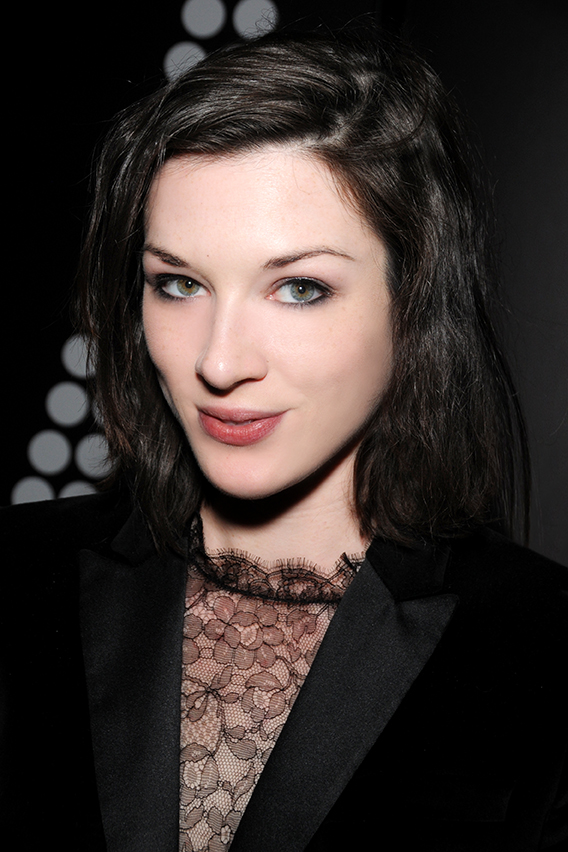

Second image credit: Stoya at the 2013 AVN Expo in Las Vegas, photographed by Michael Dorausch and released under the Creative Commons Attribution-Share Alike 2.0 license via Wikimedia Commons.